
A Guide to Kitchen Cabinet Knobs and Pulls: Size and Placement
Quick Answer: What size cabinet knobs and pulls do I need, and where do they go?
A 9" pull suits most kitchen drawers. Drawers from 12" to 2 feet wide need 1 pull, centred, while smaller drawers need only a knob. Drawers 2 feet wide and above can have 2 knobs, positioned evenly towards each side. For cupboard doors, use a 1¼" knob on the opening side. On Shaker kitchens, handles sit in the recessed panel; on flat-fronted kitchens, measure in from the edges.
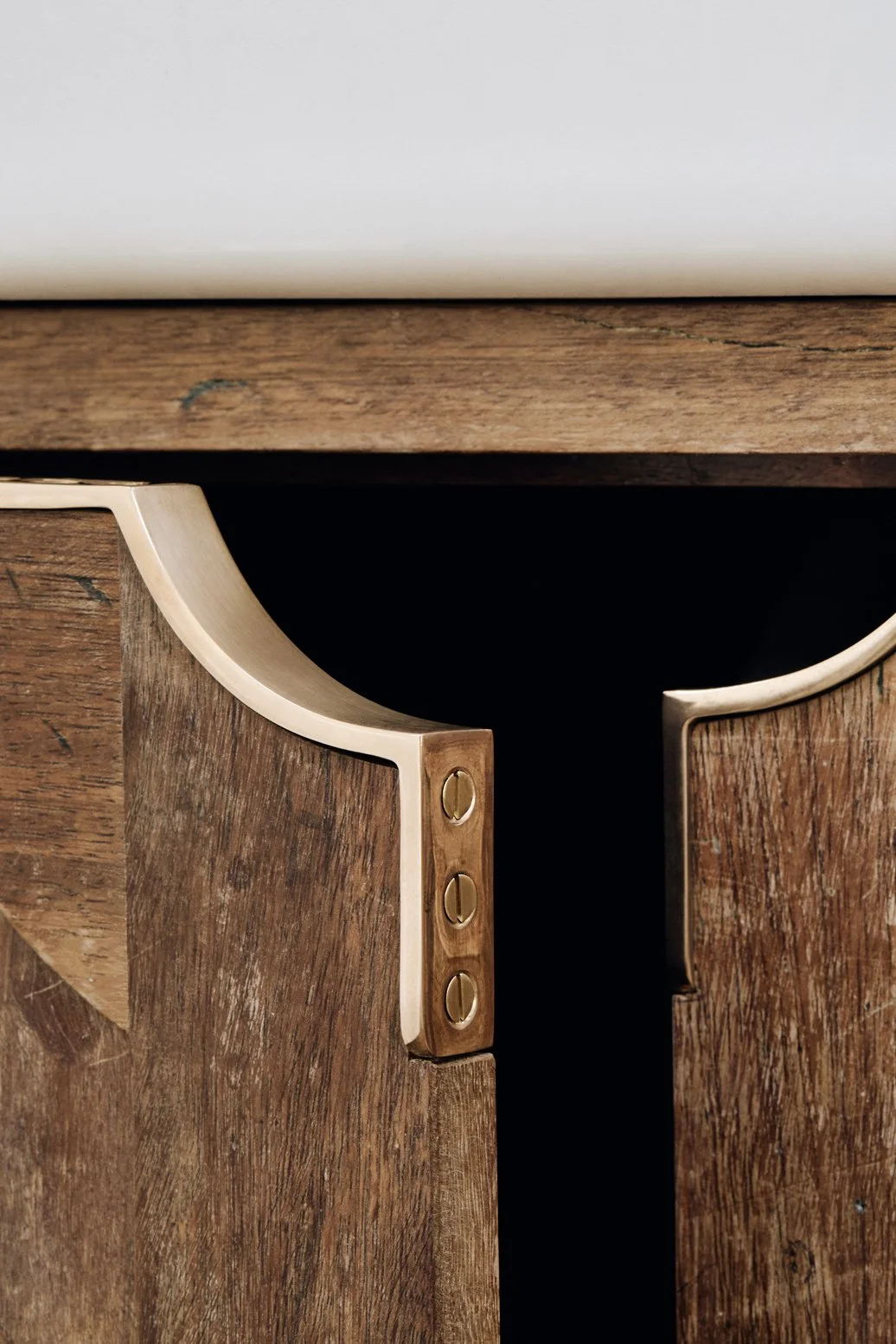
A corner pull wraps around the corner of the door and fixes to its edges, leaving the face clear. Shown here: the Moray Cupboard Pull in cast bronze.
What Types of Cabinet Handle Are There?
The type of cabinet handle you choose affects both its size and where it sits on the door or drawer. Most kitchens need only 2 or 3 types, used consistently throughout the design.
Knobs
A knob has a single fixing and is gripped between the fingers. It suits drawers of any size, used singly or in pairs, as well as cupboard doors. We make 1" and 1¼" round knobs, both of which work well on drawers.
Pull Handles
A pull handle fixes through the face of the door or drawer at each end, leaving a grip you can get your whole hand around. It suits medium and large drawers, larder doors and integrated appliances.
Our Moray Kitchen Pull is 9⅛" long, with 1½" of projection behind the grip, and our Gareth pull handles come in several sizes.
Edge Pulls
An edge pull fixes to the top edge of the drawer front rather than its face, so the front stays completely clear. Edge pulls don’t suit Shaker kitchens, where the frame gets in the way, but they work well on flat fronts.
Our Moray Drawer Pull is an edge pull: 9⅛" long, fixed to the top edge with 3 screws at each end.
Corner Pulls
A corner pull wraps around the corner of a cupboard door, fixing to the 2 edges that meet there, with nothing fixed to the face.
Our Moray Cupboard Pull is a corner pull, with a 2" fixing plate on each edge, in left- and right-hand versions.
How Handles Are Measured
Overall length is the full length of the handle from end to end, and the measurement that matters most visually. Hole centres are the distance between the fixing holes, which is what your joiner drills to. Projection is how far the grip stands off the door: allow at least 1" for your fingers.
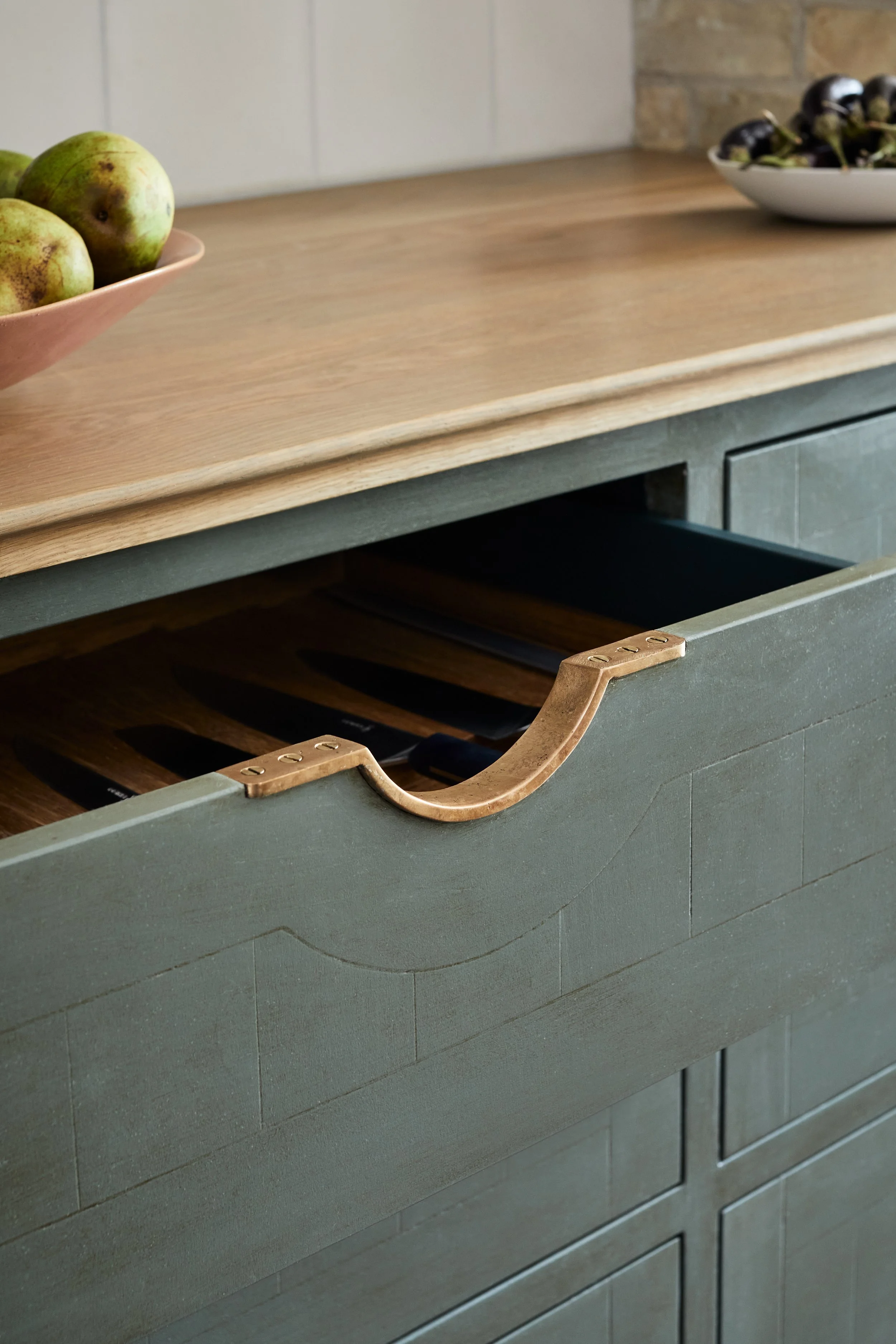
An Example of an Edge Pull
The Moray Drawer Pull fixes to the top edge of the drawer front, leaving the face completely clear.
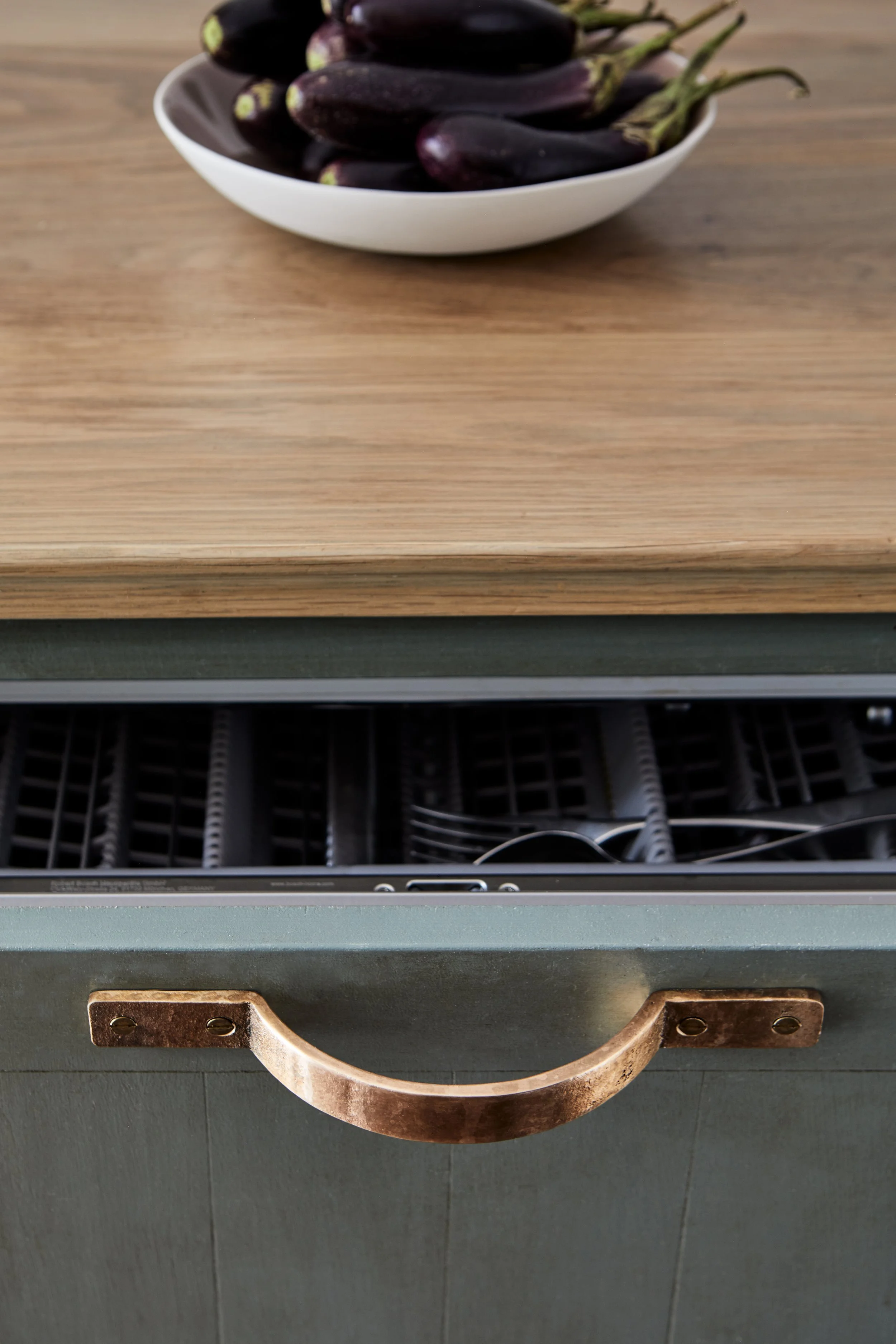
An Example of a Pull Handle
The Moray Kitchen Pull screws through the face of the door at each end, here on an integrated dishwasher, leaving room to get your whole hand around the grip.
Choosing the Right Handle Size
Drawer Pulls
Use a 7" or 9" pull on medium drawers (over 12" and up to 24" wide), and 2 of the same size on large drawers (wider than 24").
Knobs
Use a 1" round knob on small drawers (up to 12" wide), and a 1¼" round knob on medium and large drawers.
On cupboard doors, both base and wall cupboards, use a 1¼" knob.
Larder Doors and Integrated Fridge-Freezers
Use a pull of 9" minimum, up to 2 feet.
Integrated Dishwashers and Pull-Out Bins
Use a 7" or 9" pull.
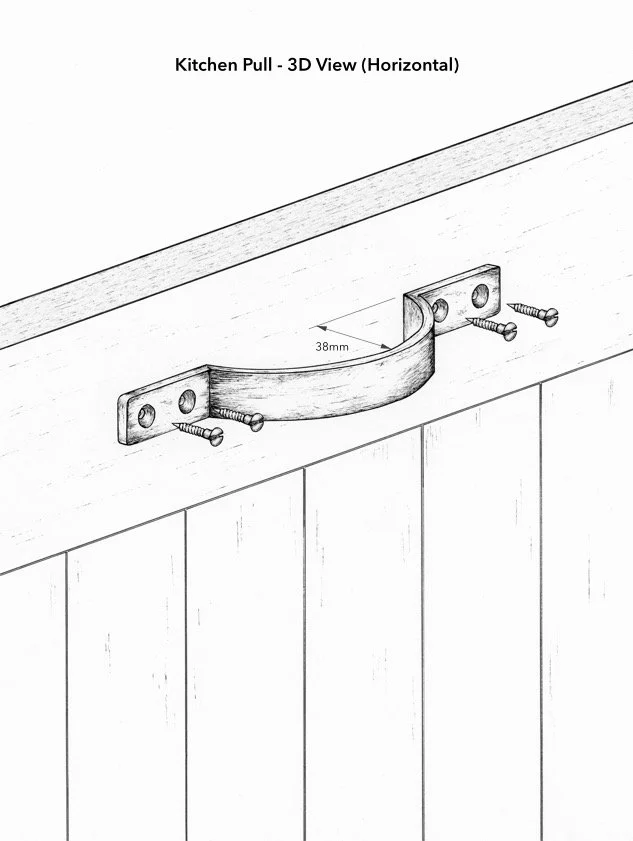
Appliance doors and drawers: centre the pull across the front, 2½" down from the top edge, or in the middle of the top rail on a Shaker kitchen.
Where to Position Cabinet Handles
Where a handle sits depends on the style of your kitchen. On a Shaker kitchen, the frame guides you. On a flat-fronted kitchen, every handle is positioned by measuring in from the edges.
Shaker Kitchens
A Shaker door or drawer front consists of 2 vertical stiles, 2 horizontal rails and a flat, recessed central panel.
Doors
1. Base Cupboard Doors / Under-Sink Cupboard Doors
Position the knob halfway down the door.
Centre it across the width of the opening-side stile.
2. Wall Cupboard Doors
Position the knob 3½" up from the bottom edge of the door.
Centre it across the width of the opening-side stile.
3. Full-Height Larder Doors / Integrated Fridge-Freezer Doors
Position the centre of the handle 3 feet above finished floor level.
Fix the handle to the opening-side stile, centred across its width.
4. Integrated Dishwasher Doors / Pull-Out Bin Unit Doors
Use a pull handle, centred horizontally across the door.
Position the pull in the middle of the top rail, both horizontally and vertically.
Drawers
5. Small Drawers: Up to 12" Wide
Use 1 knob, positioned in the middle of the recessed panel, both horizontally and vertically.
6. Medium Drawers: Over 12" and Up to 24" Wide
Ideally use 1 central pull handle, although a single knob works equally well. Position it in the middle of the recessed panel, both horizontally and vertically.
7. Large Drawers: Wider Than 24"
Use 2 knobs. Measure ⅕ of the drawer’s width in from each side and fix one there, centred vertically within the recessed panel.
Example: on a 30" drawer, the centre of each knob sits 6" in from the side.
Shaker Frame Widths
A 3" frame is a good standard for Shaker kitchen cabinetry.
A 2" stile is the absolute minimum for a standard 1¼" knob.
For integrated dishwasher and pull-out bin doors, the top rail should be at least 3" wide to take a pull handle.
As a general rule, all knobs and pull handles on Shaker drawers should sit within the recessed central panel, rather than on the surrounding rails or stiles.
On integrated dishwasher and pull-out bin doors, the pull handle sits on the top rail to provide better leverage when opening.
Flat-Fronted Kitchens
With no frame to guide you, every handle is positioned by measuring in from the edges of the door or drawer front.
Doors
1. Base Cupboard Doors / Under-Sink Cupboard Doors
Position the knob halfway down the door.
Set its centre 2" in from the opening edge.
2. Wall Cupboard Doors
Position the knob 3½" up from the bottom edge of the door.
Set its centre 2" in from the opening edge.
3. Full-Height Larder Doors / Integrated Fridge-Freezer Doors
Position the centre of the handle 3 feet above finished floor level.
Fit the handle vertically, with its centre 3" in from the opening edge.
4. Integrated Dishwasher Doors / Pull-Out Bin Unit Doors
Use a pull handle, centred horizontally across the door.
Position the centre of the pull 2½" down from the top edge.
Drawers
5. Small Drawers: Up to 12" Wide
Option 1, knob: use 1 knob, positioned in the middle of the drawer front, both horizontally and vertically.
Option 2, edge pull: use 1 edge pull, positioned centrally on the top edge of the drawer.
6. Medium Drawers: Over 12" and Up to 24" Wide
Option 1, pull handle or knob: ideally use 1 central pull handle, although a single knob works equally well. Position it in the middle of the drawer front, both horizontally and vertically.
Option 2, edge pull: use 1 edge pull, positioned centrally on the top edge of the drawer.
7. Large Drawers: Wider Than 24"
Option 1: Use 2 pull handles. Measure ¼ of the drawer’s width in from each side and fix the handles at these positions, centred vertically on the drawer front.
Option 2: Use 2 knobs. Measure ⅕ of the drawer’s width in from each side and fix the knobs at these positions, centred vertically on the drawer front.
Option 3: Use 2 edge pulls. Measure ¼ of the drawer’s width in from each side and fix the edge pulls at these positions, on the top edge of the drawer.
Example: on a 30" drawer, the centre of each pull handle or edge pull sits 7½" in from the side, and the centre of each knob sits 6" in.
As a general rule, knobs and pull handles on flat-fronted drawers should be centred on the drawer front, measured from its outside edges. Edge pulls are always positioned on the top edge of the drawer.
Large Drawer Measurements
How far the centre of each handle sits in from the side of a large drawer:
28" drawer: knobs 5⅝" in, pulls 7" in
30" drawer: knobs 6" in, pulls 7½" in
32" drawer: knobs 6⅜" in, pulls 8" in
36" drawer: knobs 7¼" in, pulls 9" in
40" drawer: knobs 8" in, pulls 10" in
Mixing Knobs, Pull Handles and Edge Pulls
It’s perfectly acceptable to use a combination on different-sized drawers. For example, a single knob on small drawers, a central pull or edge pull on medium drawers and 2 knobs on large drawers.
The choice should follow the proportions of the drawer, creating a consistent approach throughout the kitchen rather than mixing hardware at random.
Corner Pulls
Corner pulls go on the opening side of the door: the top corner on base cupboards, and the bottom corner on wall cupboards.
Tip: Before drilling, run a strip of masking tape down the door or across the centre of the drawer front, and mark out the knob and handle positions on the tape. You can check the positions by eye before committing.
Sand-cast handles also vary slightly from one casting to the next, so ask your joiner to measure the actual handle before drilling, rather than working from a drawing.
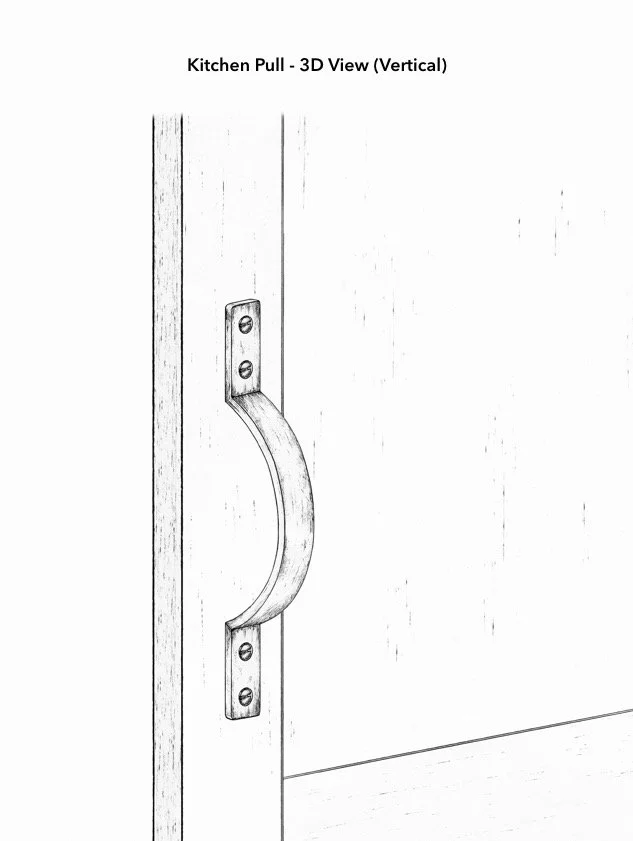
Larder and fridge-freezer doors: fit the pull vertically on the opening-side stile, centred 3 feet above the floor.
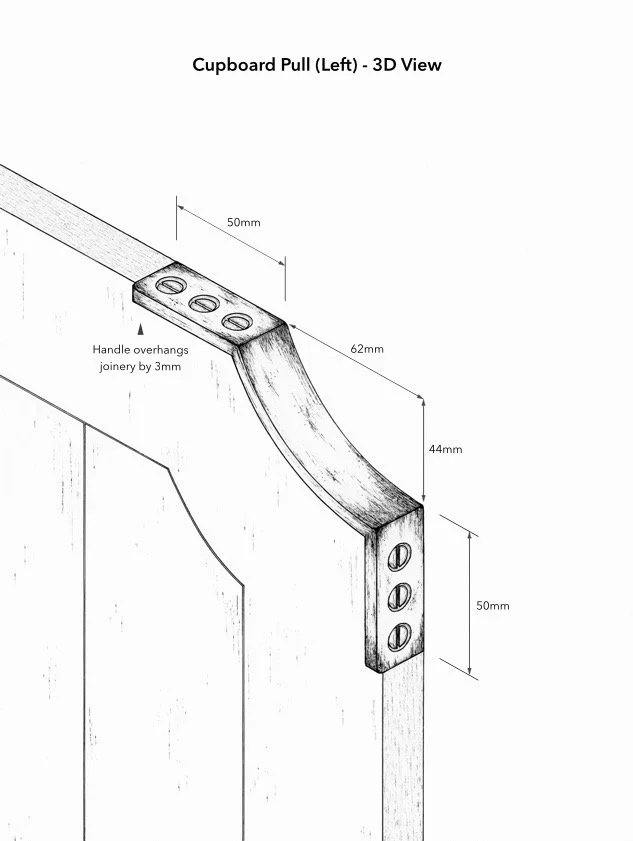
Corner pulls: fit on the opening side, at the top corner of base cupboards and the bottom corner of wall cupboards.
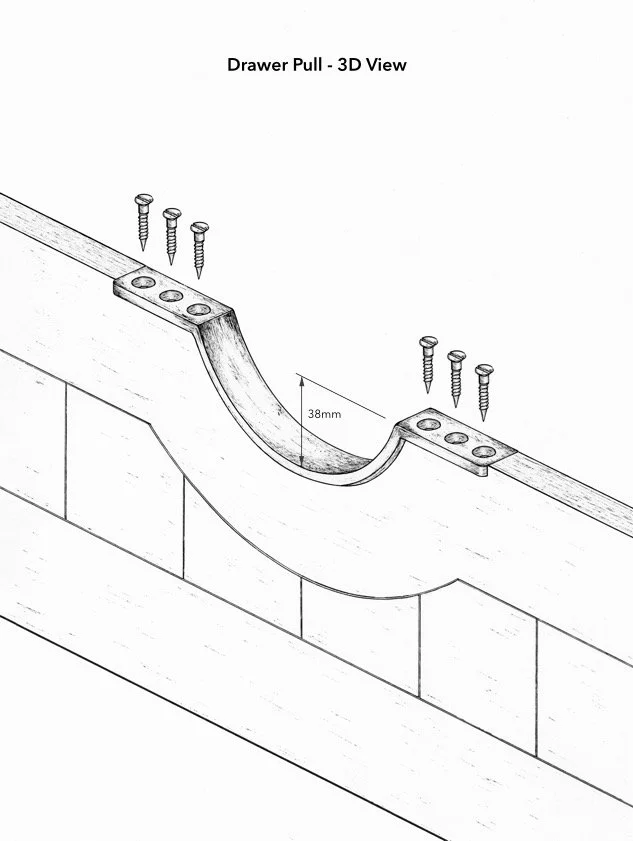
Edge pulls: fix centrally on the top edge of the drawer front. On drawers wider than 24", use 2, each ¼ of the drawer’s width in from the side.
How to Clean Bronze Cabinet Handles
Our cast bronze handles are solid and unlacquered, so they darken and develop a natural patina with use. The areas you touch most stay brighter, giving each handle depth and character.
If you’d rather keep them bright, they can be polished back whenever you like. I explain the method step by step in my guide to cleaning brass and bronze.
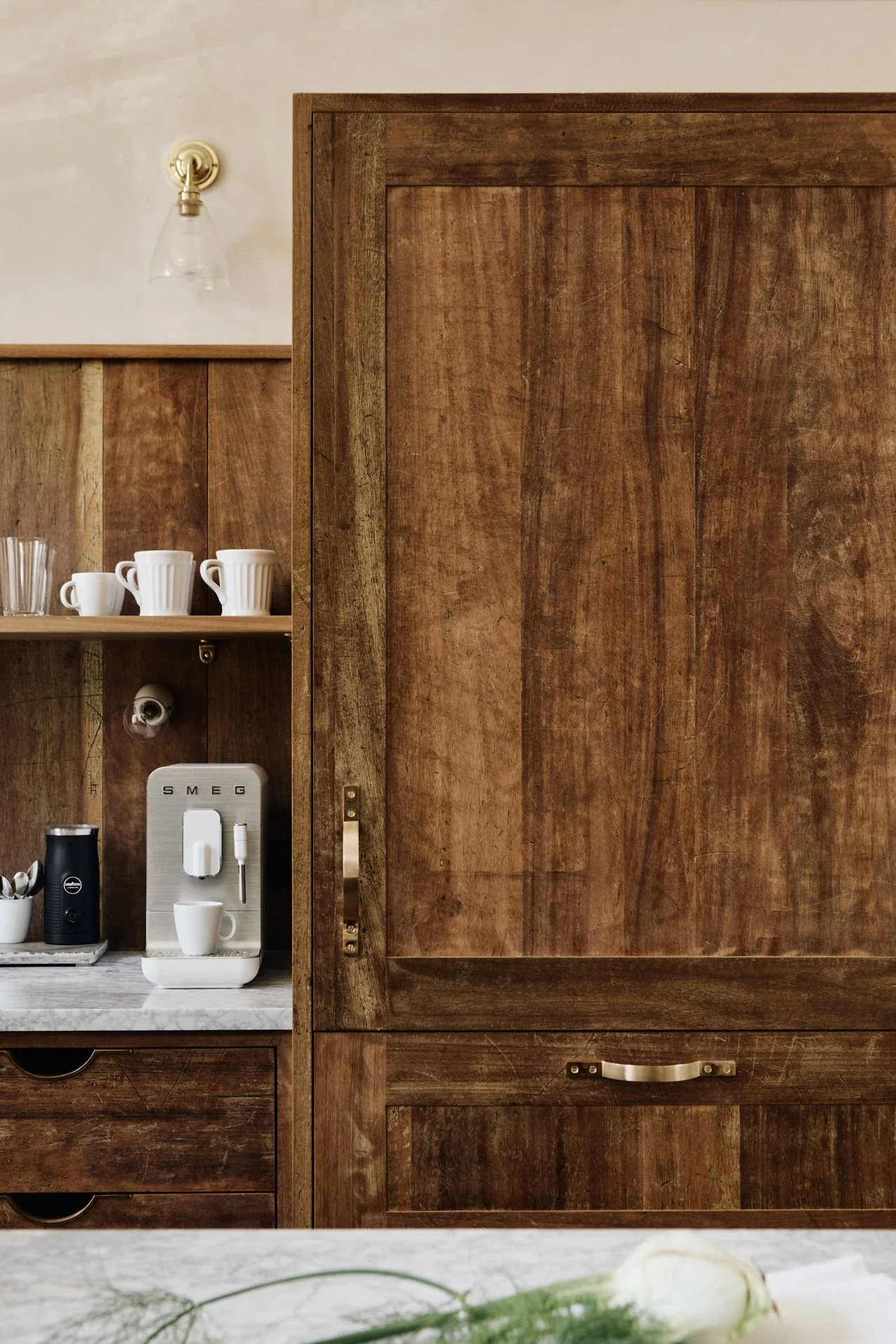
Moray cast bronze pulls throughout an iroko kitchen: on the fridge-freezer door, the freezer drawer and, as edge pulls, on the drawers alongside.
Cabinet Handles: Frequently Asked Questions
-
A 9" pull suits most kitchen drawers. Small drawers, a single knob, or an edge pull on a flat-fronted kitchen. Medium drawers, over 12" and up to 24" wide, need 1 pull, centred. Large drawers, wider than 24", can have 2 knobs, positioned evenly towards each side. For cupboard doors, use a 1¼" knob on the opening side. On Shaker kitchens, handles sit in the recessed panel; on flat-fronted kitchens, measure in from the edges.
-
A good rule of thumb: knobs for light, pulls for weight. Cabinet doors are light, so they take knobs. Drawers and full-height doors are heavier, so they take pulls.
-
Yes. Let the size of each drawer decide: a knob on small drawers, a pull on medium drawers and 2 knobs on large drawers. Mixing works when it follows a rule, not when it’s random.
-
Use a pull at least 9" long. On a full-height pantry or larder door, a pull up to 2 feet long works well. Fit it vertically, with the centre of the pull 3 feet above the floor.
-
Using one cast handle as a drilling template for the rest. Handmade cast handles vary slightly, so offer up each handle to its own door or drawer before drilling.
Fitting pull handles too close to the inside edge of a Shaker drawer’s stile. Allow enough clearance so the handle doesn’t touch the frame.
Positioning handles too low on integrated dishwashers, pull-out bins or trash pull-outs. This can make heavy doors harder to open because you don’t have enough purchase.
A Final Thought
Handles are the part of a kitchen you touch every day. Get the size and position right and they quietly do their job. Get them wrong, and you notice every time you open a drawer. They should feel right in the hand, not just look right in a photograph. For this guide, I’ve used inches. Imperial divides neatly into halves, quarters and eighths, which is how you judge proportion by eye.
The principle I always come back to is that everything needs space to breathe. A handle should sit comfortably on its door or drawer, never squeezed or crowded. Give each one room, and the whole kitchen feels calmer.

About the Author
Mark Lewis
Interior designer turned maker. I could not find the right fittings for the period homes I was renovating, so I began making my own. My bronze and brass hardware is sand-cast in a British foundry and available through our online home store.