
How to Clean Brass and Bronze: Handles, Taps & Fittings
Quick Answer: How to clean and polish tarnished brass and bronze
Solid, unlacquered brass and bronze can be left to age naturally or polished back to a bright shine. To clean them, roll a ball of grade 0000 wire wool, soak it with Brasso and rub the metal in small circles until the Brasso turns from cream to black. Wipe off the black residue with a dirty cloth, then buff with a separate clean cloth until the metal shines. Polishing resets the patina rather than stopping it, so the metal will gradually darken again with use.
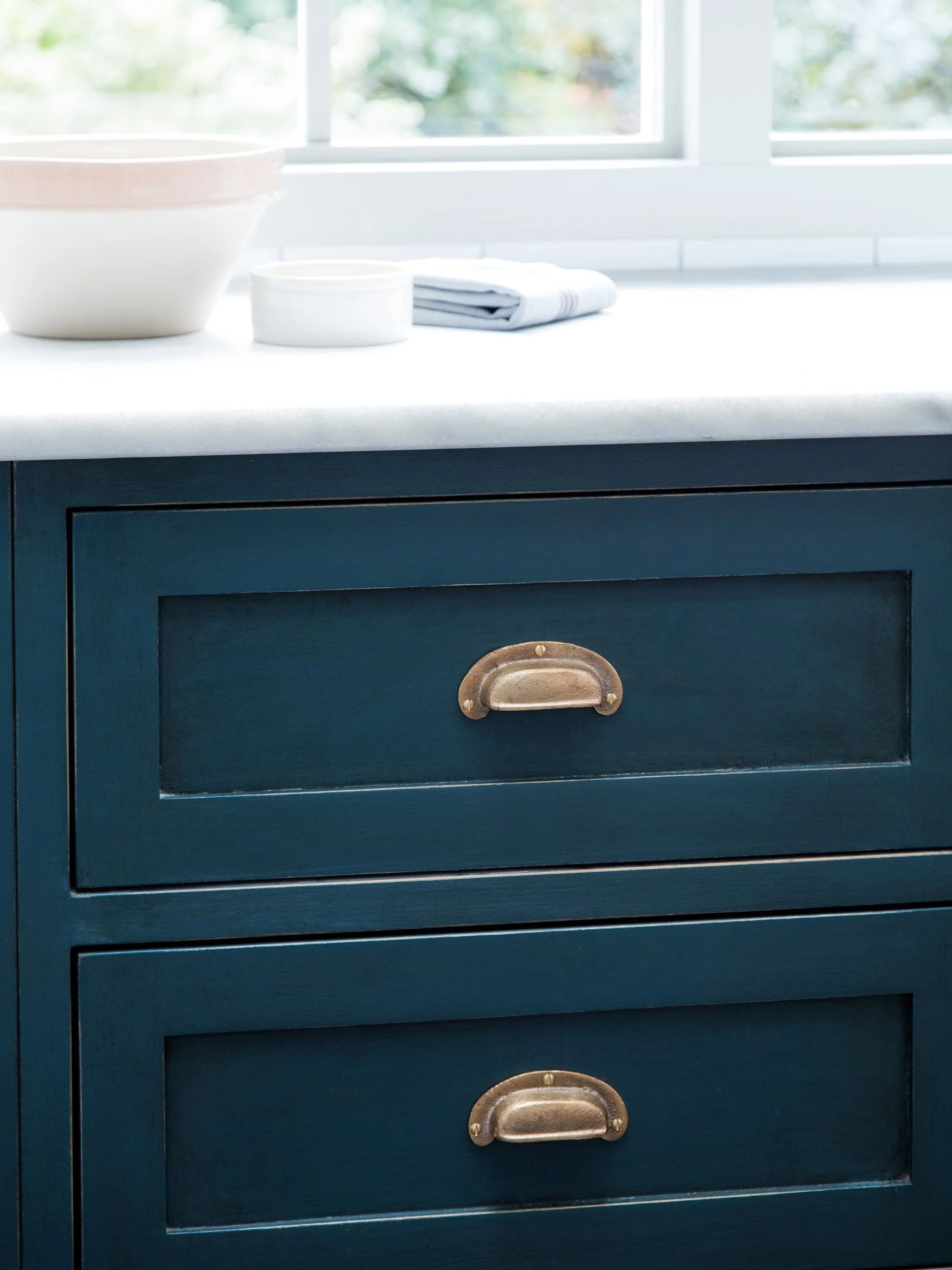
George Handle, Cast Bronze
Should You Clean Brass and Bronze Hardware?
Solid, unlacquered brass and bronze hardware changes with age, and you can choose whether to let it darken or bring it back to a bright shine. Unlike plated or lacquered fittings, the surface isn't sealed, so it reacts with the air and with everyday handling.
Solid, unlacquered brass and bronze look fabulous with age. I love working with metals that go on a journey, picking up character through everyday use and becoming more a part of your home over the years.
In my experience, the best approach is usually to leave it alone and polish only when you want a brighter finish. Below, I explain how brass and bronze age, and how to clean and polish them step by step, using the method I use on our own cast hardware.
Natural Patina: Why I Usually Leave It Alone
So many modern fittings are plated or coated to keep them looking exactly the same. With solid, unlacquered metals, the finish keeps evolving, and that ageing is part of the appeal.
You have 2 options:
Leave it to age: let the natural patina develop through use, with darker recesses and brighter highlights where it's handled.
Polish it back: reset the clock and bring the metal back to a bright finish whenever you like.
Which you choose will depend on the look you're after.
How Bronze Ages
As bronze oxidises, its colour deepens towards rich, dark, chocolatey browns. Recesses become darker, while the areas you regularly touch can stay brighter.
That variation gives the surface depth and character, and it's why I tend to leave it alone.
How Brass Ages
Unlacquered brass gradually loses its bright yellow shine as it tarnishes, mellowing into warm honey, softened amber and deeper golden-brown tones. The surface becomes softer and less reflective, with darker areas alongside brighter highlights where it's handled.
I love that warmth and the way it develops over time.
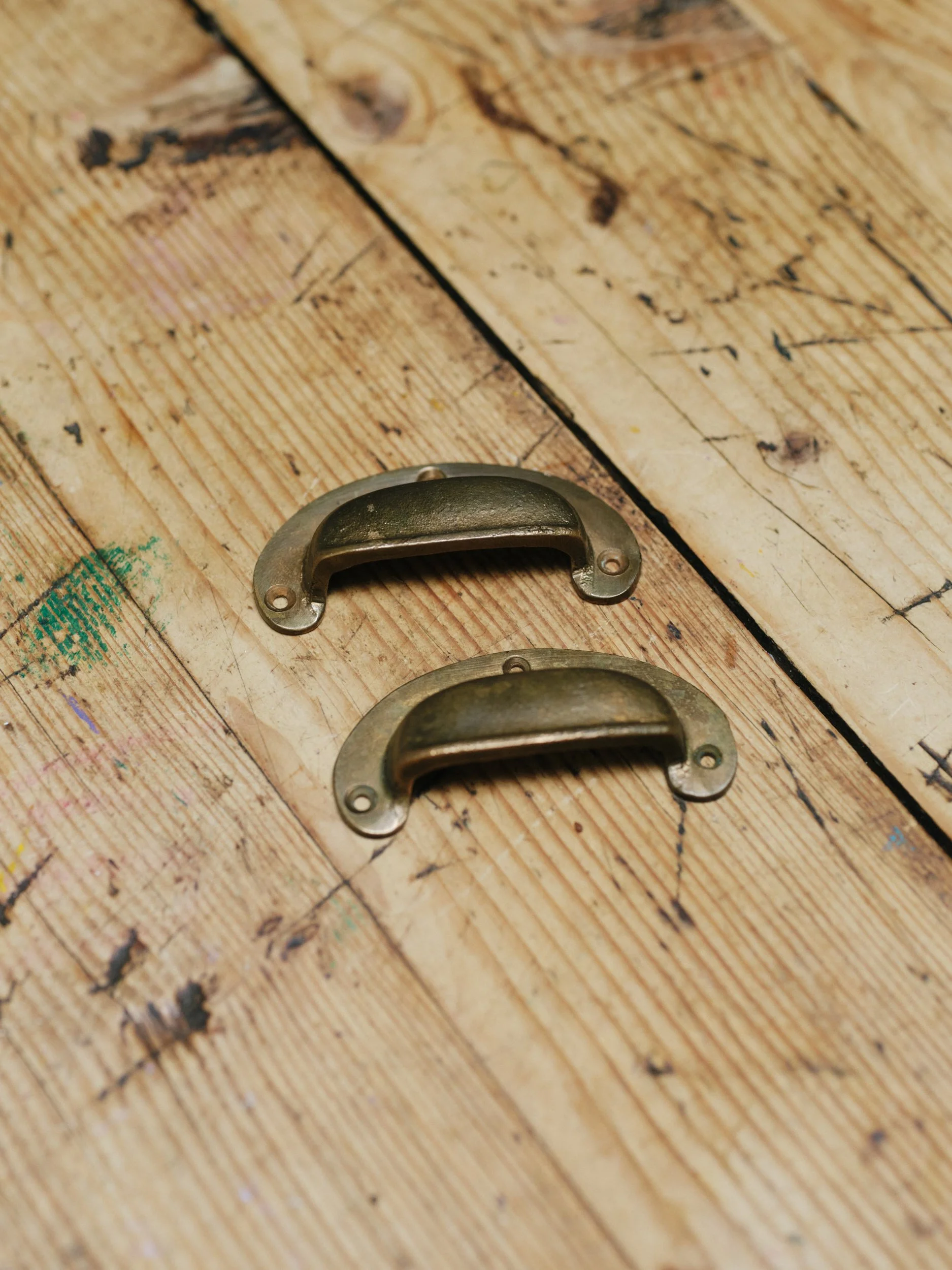
Before cleaning: tarnished bronze handles
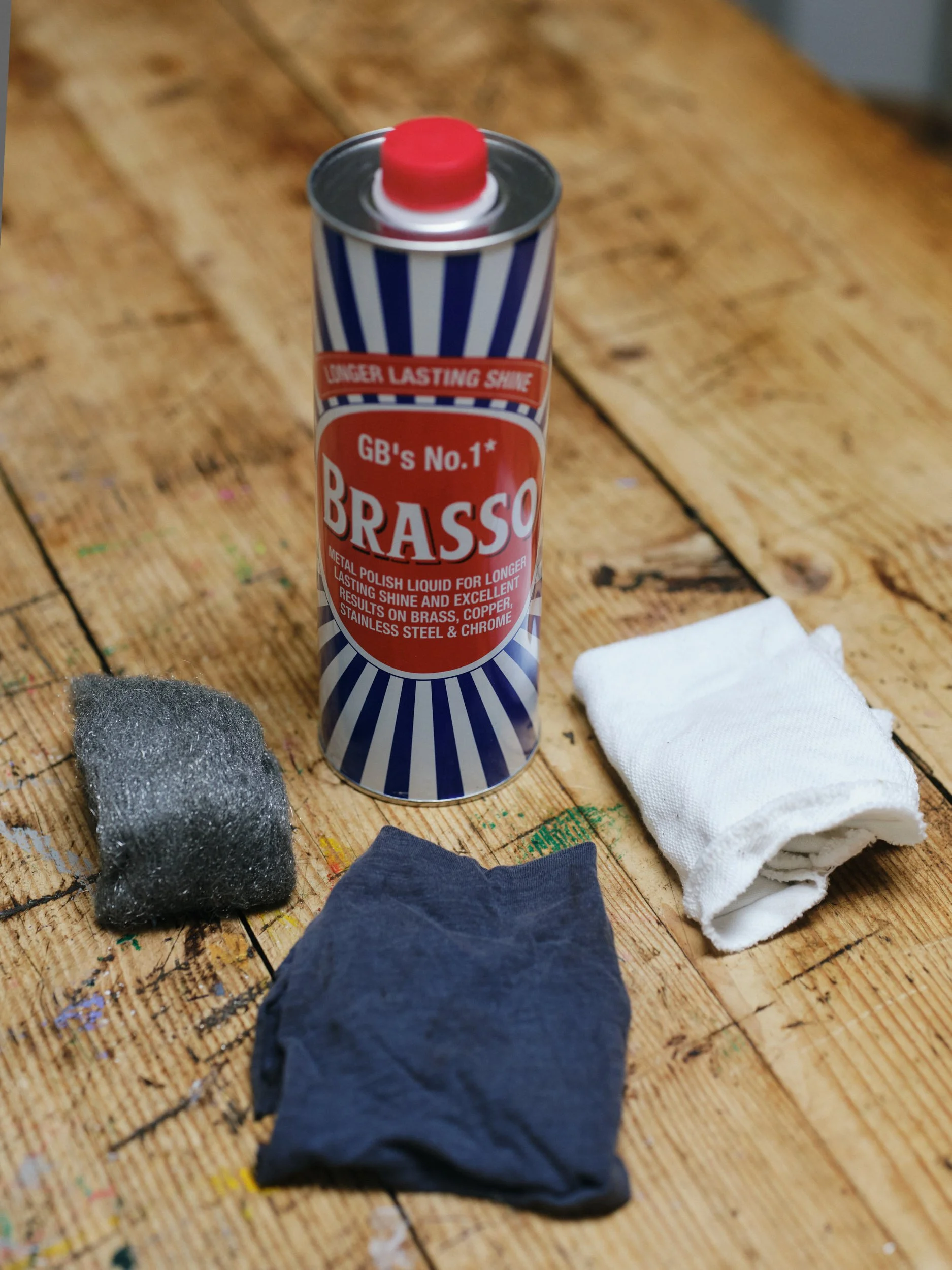
What you’ll need
What You’ll Need to Clean Brass and Bronze
Choosing a Metal Polish and Wire Wool
I use Brasso on dull or discoloured brass and bronze, and it’s the polish shown in the photographs. It’s available from Barnitts in the UK and H-E-B in the US.
Apply it with grade 0000 wire wool, also called steel wool. It’s sold as “ultra fine” by Liberon in the UK and “super fine” by Homax in the US.
Look for 0000 (4 zeros) on the packet. “Fine” on its own can mean a coarser grade, which will scratch the surface.
Cloths, Gloves and a Work Surface
Get everything together before you start, with enough space to lay out the pieces you’re polishing.
An old towel to cover your work surface. Choose somewhere you don’t mind getting messy.
A dirty cloth for wiping away the excess Brasso and dark residue. I use a darker colour so it’s easy to tell apart.
A separate clean, soft buffing cloth for the final shine. I use a lighter colour for this.
A work apron to keep polish off your clothes.
Close-fitting protective gloves, which protect your hands and still let you handle smaller fittings comfortably.
If you’re polishing several pieces, keep 2 piles on the go: dirty cloths and buffing cloths.
How to Clean and Polish Brass and Bronze
In the photographs, I’m cleaning our George Handle, Cast Bronze.
Cover your work surface with an old towel, lay out everything you need and put your gloves on.
Tear off a piece of wire wool and roll it into a ball roughly the size of a golf ball.
Give the tin a good shake, then pour enough Brasso onto the wire wool to partly soak it.
Rub the metal in small circles. Keep going until the Brasso changes from its brandy-cream colour to black, working over the whole handle area by area.
Put the wire wool down and pick up your dirty cloth. Thoroughly wipe the excess black Brasso off the whole handle.
Pick up your clean buffing cloth and buff away any remaining traces of Brasso until the handle is shiny and looks as good as new.
The black colour is the sign that it’s working. It’s the tarnish lifting off the metal, so don’t stop rubbing until you see it.
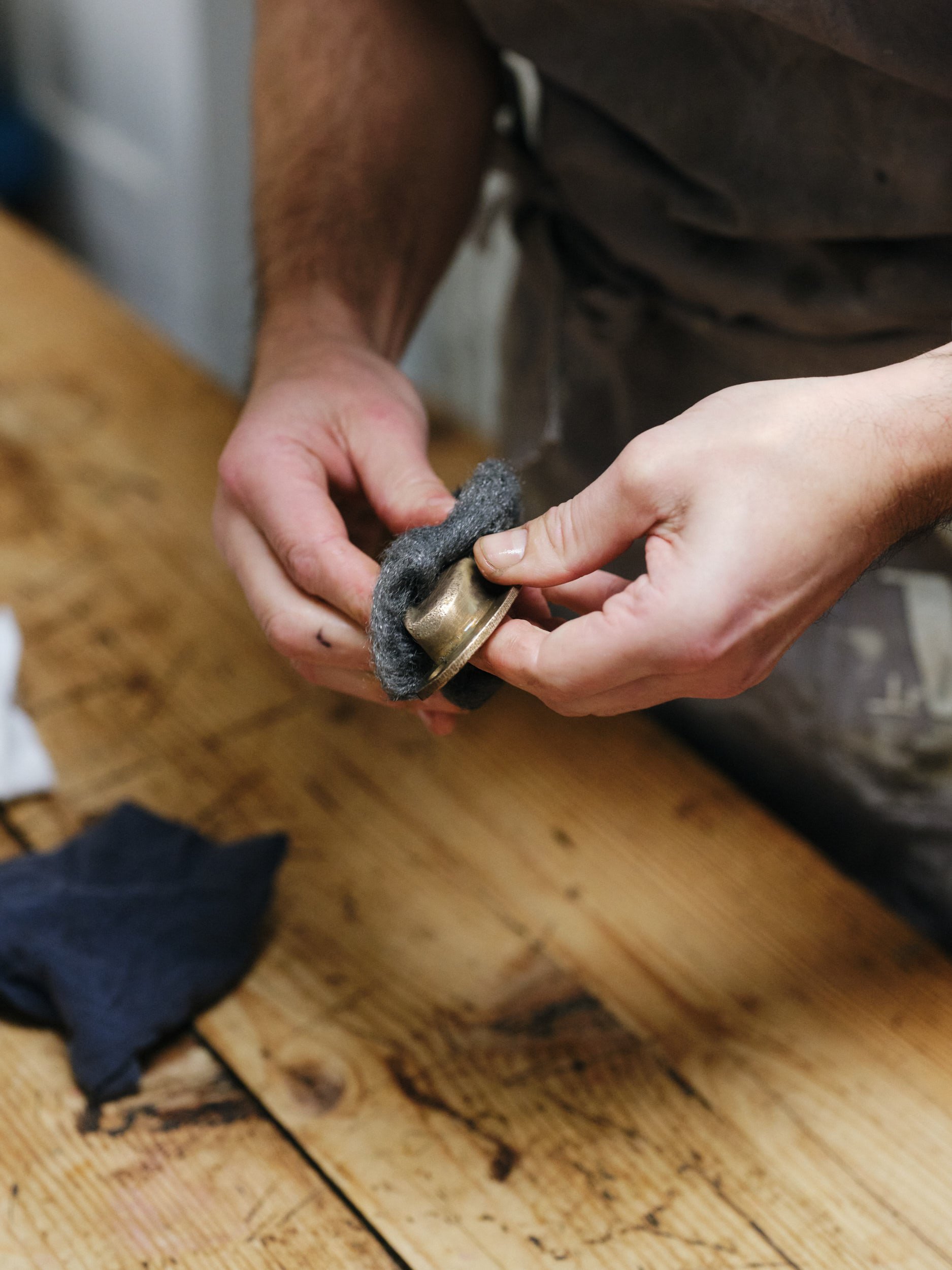
Cleaning with wire wool and Brasso
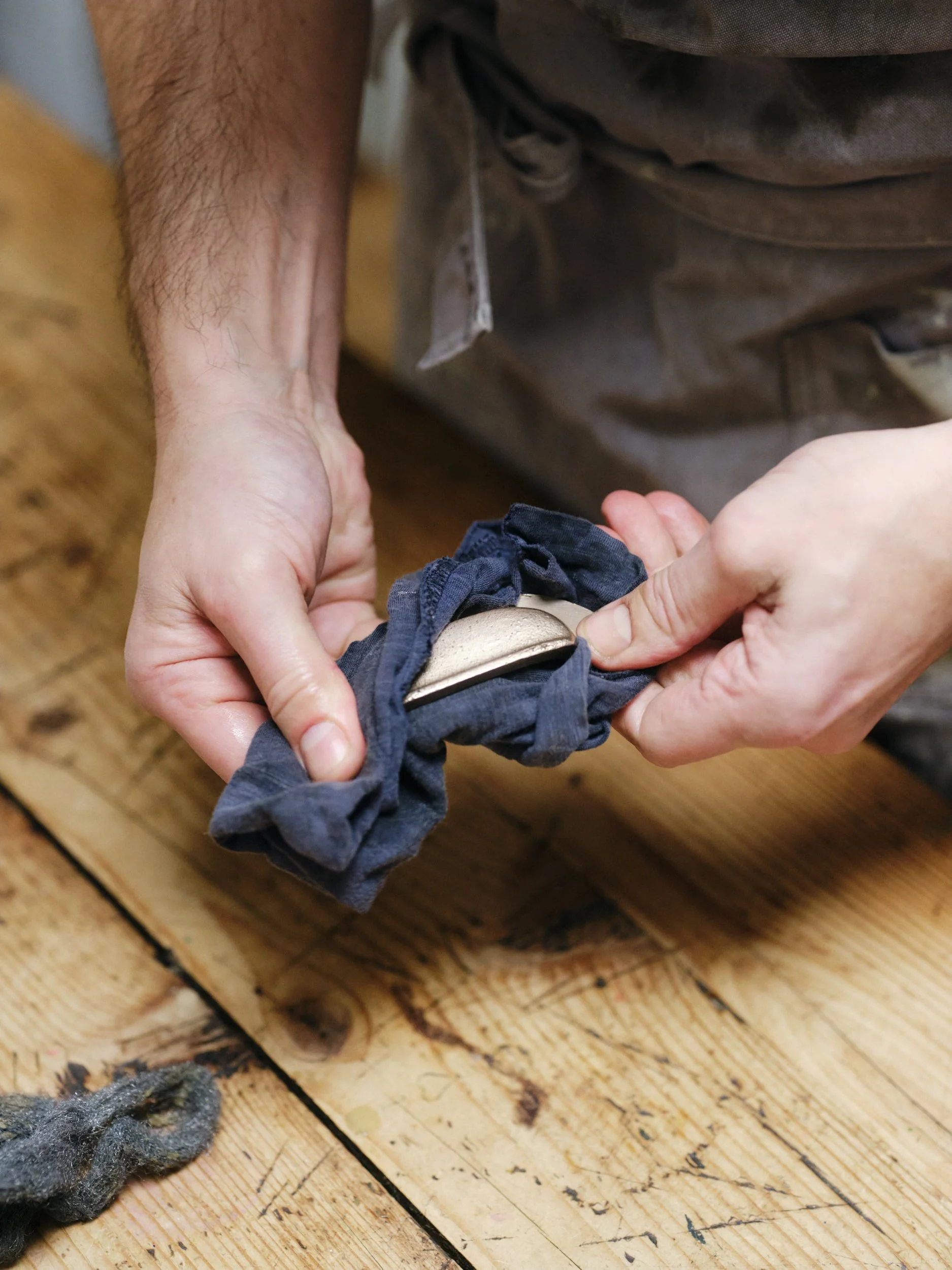
Wiping off with the dirty cloth
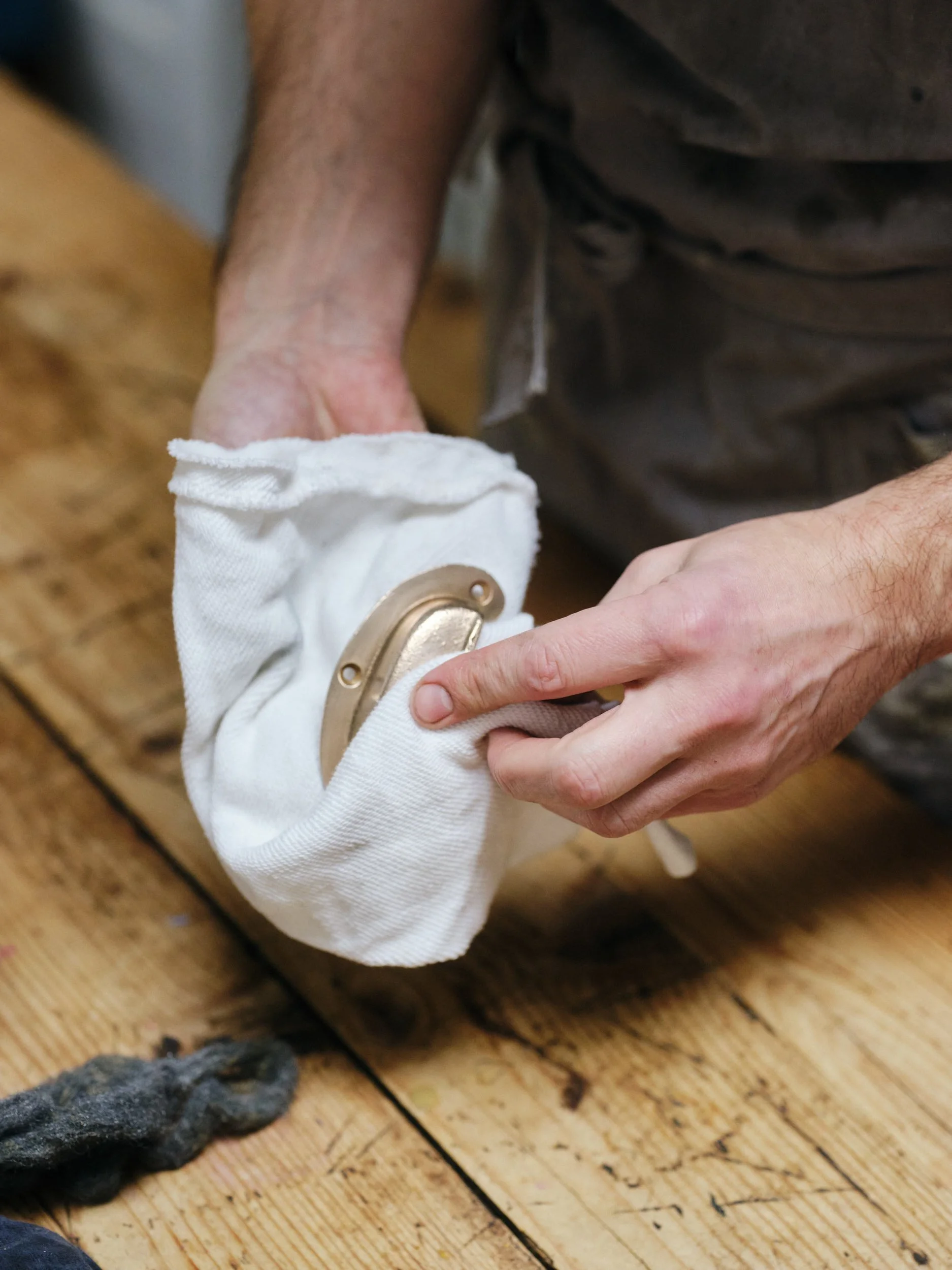
Buffing to a shine
“I love working with metals that go on a journey, picking up character through everyday use.”
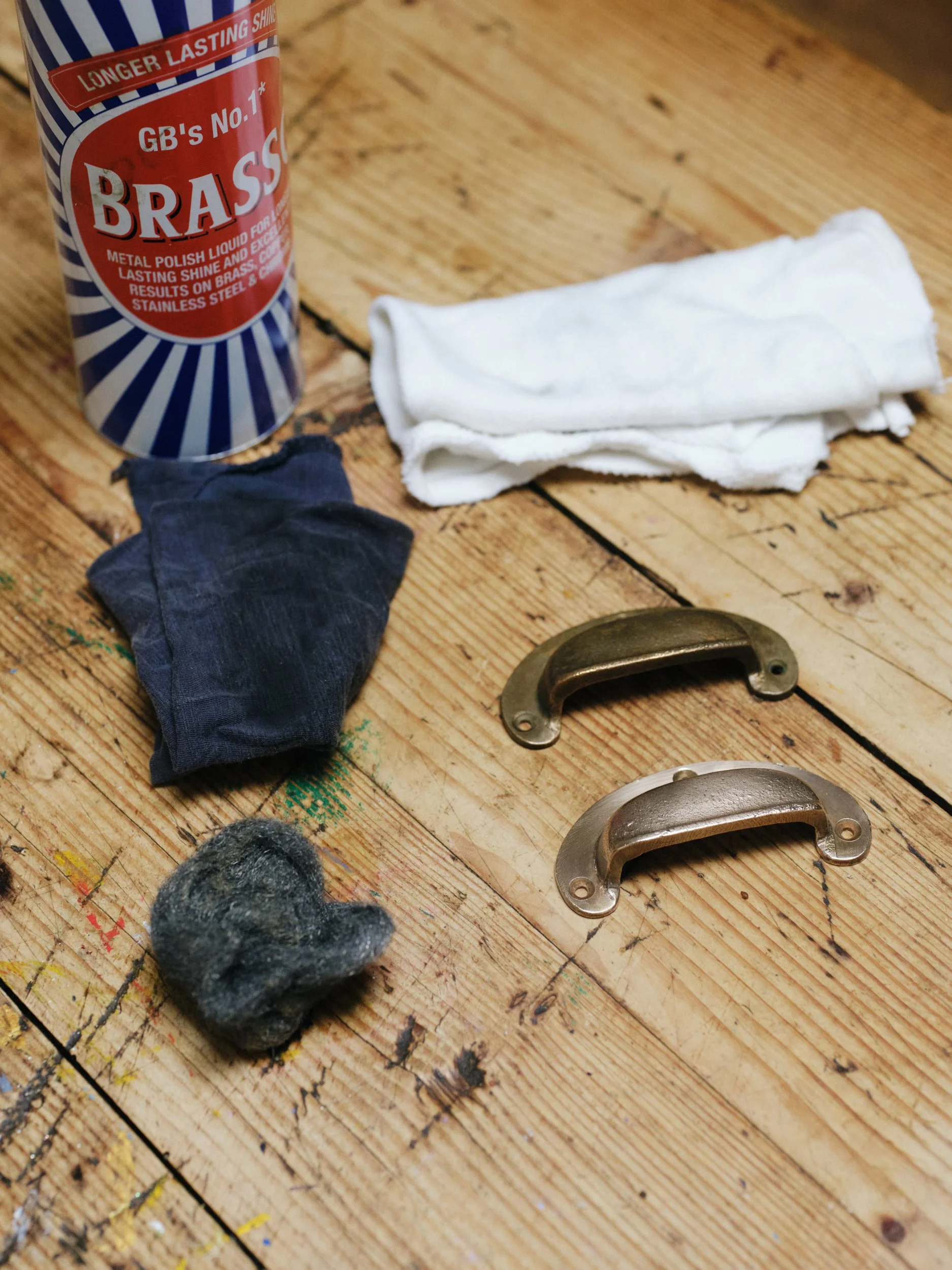
Before and after polishing
Key takeaways
- To clean tarnished solid, unlacquered brass and bronze, apply Brasso with grade 0000 wire wool, wipe off the residue with an old cloth, then buff with a separate clean cloth.
- Keep rubbing until the Brasso turns from cream to black. That's the sign it's lifting the tarnish.
- If you prefer the aged look, leave it alone. The natural patina is part of the appeal.
- Polishing resets the patina; it doesn't stop it. The metal will gradually darken again with use.
Brass and Bronze: Frequently Asked Questions
-
Yes. I use Brasso on both solid, unlacquered brass and bronze, applying it with fine wire wool, wiping off with a dirty cloth, then buffing with a separate clean cloth.
-
Only when you want a brighter finish. There’s no set schedule, and I usually prefer to let the natural patina develop.
-
Yes. Both metals gradually oxidise and develop a patina again with use and exposure to air. Polishing resets the process; it doesn’t stop it.
-
As you rub, dirt and metal tarnish lift off the surface and mix into the Brasso, darkening the cream until it turns black.
-
Ideally, unscrew your handles and clean them somewhere separate. If that isn’t possible, mask the surrounding area thoroughly with masking tape before you start, and peel it off as soon as you’ve finished buffing.
-
Use an old toothbrush to gently brush out any polish caught in the crevices, then wipe away the loosened residue before buffing.
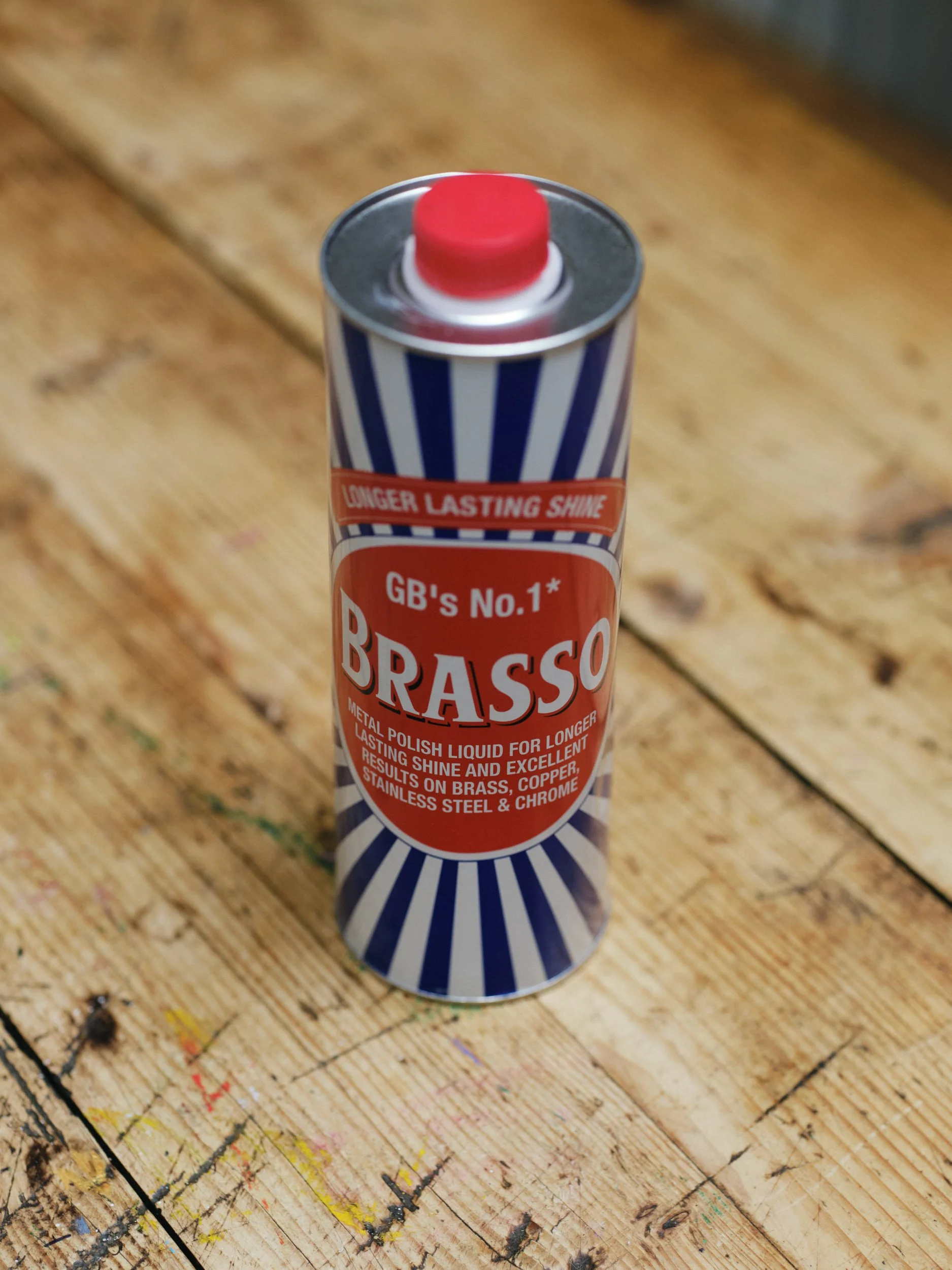
Brasso metal polish
A Final Thought
What I love about solid, unlacquered brass and bronze is that you can bring them back to life with a polish, or leave them to age with your home. Their appearance isn’t fixed; it develops through use and becomes part of your home’s story.
An unlacquered brass kitchen tap is a lovely example. For me, a polish every couple of months keeps it feeling fresh, while a little oxidation stays around the edges and in the harder-to-reach details.
You’ll never get every last bit, and I think that’s part of its beauty. The brighter surfaces against those darker edges create a soft, two-tone effect, giving the metal depth and character.
It’s a finish shaped by living with it.

About the AUthor
Mark Lewis
Interior designer turned maker. I could not find the right fittings for the period homes I was renovating, so I began making my own. My bronze and brass hardware is sand-cast in a British foundry and available through our online home store.